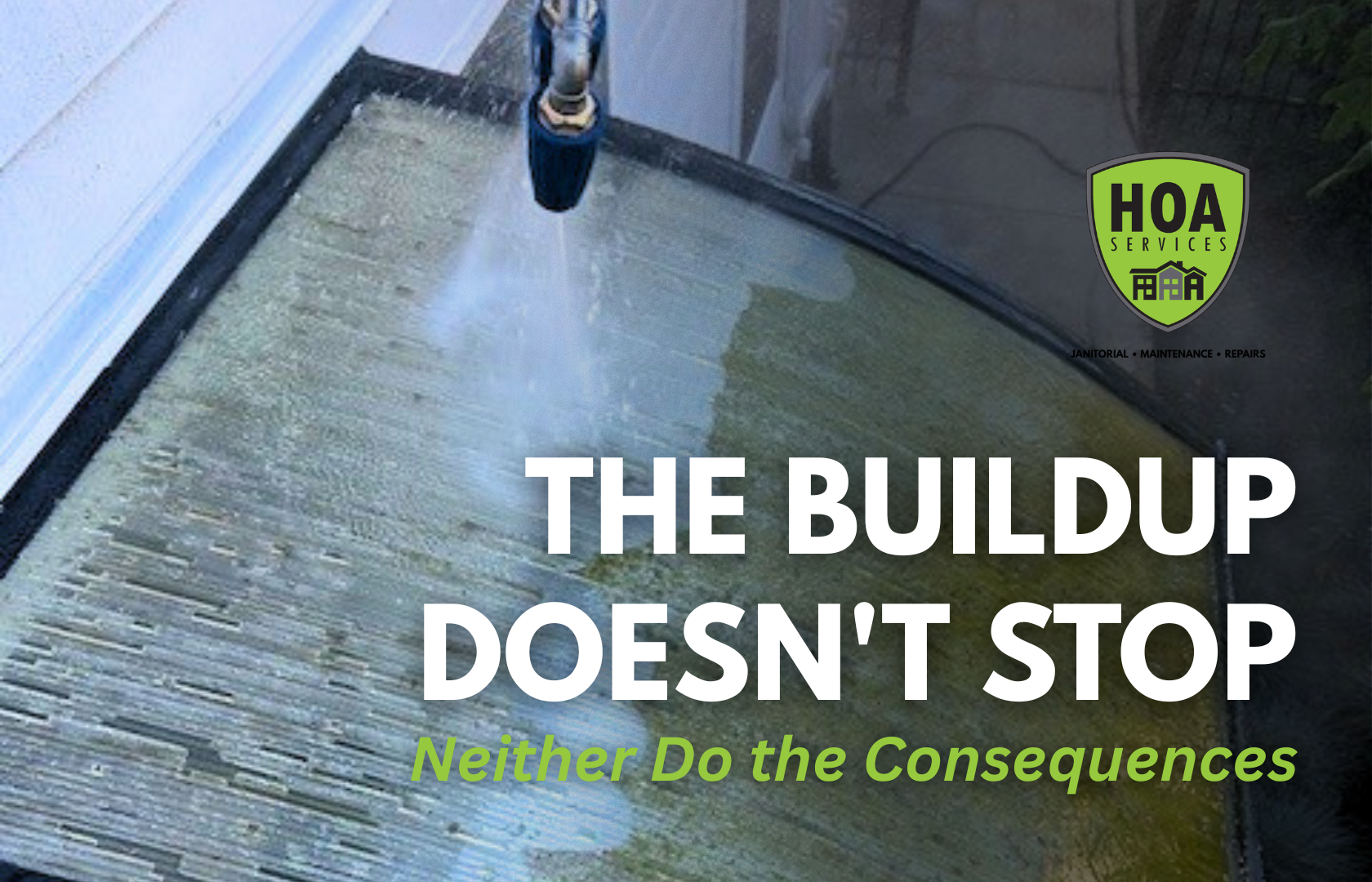
Pressure washing is easy to defer. Nothing is visibly failing, and there are bigger items on the work order. On every exterior surface of your property though, organic buildup is doing quiet, cumulative damage, and it does not stop because no one is paying attention.
Pacific Northwest weather patterns accelerate this process. Persistent moisture and mild temperatures create ideal conditions for moss, algae, mold, and mildew to establish themselves on virtually every outdoor surface. What looks like surface-level grime in the spring can become a structural problem by fall.
Skipping Pressure Washing Does Not Just Look Bad. It Costs You Later.
The curb appeal argument is real, but it’s not the most important one. Organic buildup on exterior surfaces is an active problem, not a passive one. Moss retains moisture against whatever it grows on. Algae and mildew create acidic conditions that degrade surface materials over time. Debris trapped in joints and textured surfaces holds additional moisture and accelerates deterioration from the inside out. The damage from skipping pressure washing is gradual, largely invisible, and significantly more expensive to address once it has progressed. Routine cleaning interrupts this process, preventing significant damages.
Concrete Surfaces: Organic Buildup Leads to Erosion and Spalling
Concrete looks like it can handle whatever accumulates on it, and for a while it can. However, moss and algae lead to persistent moisture exposure in the small pores and surface irregularities of concrete. That moisture works through a freeze-thaw cycle that gradually widens those irregularities into visible cracks. Once cracking begins, water infiltration accelerates, and the surface starts to spall.
What starts as a cleaning issue becomes a repair issue, and concrete repairs across a multi-unit property are neither inexpensive nor quick to schedule. Keeping walkways, stair landings, and parking areas on a seasonal pressure washing schedule is one of the most cost-effective ways to extend their service life.
Wood Decks and Stairs: Trapped Moisture and the Path to Dry Rot
Wood is porous. On decks and exterior stairs specifically, that means it absorbs rain, organic debris, pollen, and the sustained moisture that the PNW climate generously provides. When debris holds that moisture against the wood surface and prevents it from evaporating, the ideal conditions for dry rot quickly develop.
Dry rot is a fungal process that breaks down structural integrity from the inside out. By the time it is visible on the surface, the material below has already been compromised. Beyond structural risk, debris-covered wood surfaces become dangerously slick when wet, creating real slip-and-fall liability for boards and property managers.
Garage Floors: Oil and Grease Stains Become Permanent
Petroleum-based contamination from vehicles absorbs into concrete relatively quickly. In the early stages, a professional-grade degreaser combined with pressure washing can lift those compounds out effectively. Left in place, the absorption deepens, and what was once a removable blemish becomes a permanent stain. At that point, the only options are aggressive chemical treatment, grinding, or surface coating, all of which cost considerably more than routine cleaning.
Oil and grease accumulation also creates slip hazards in a high-traffic space, adding liability exposure that makes a regular cleaning schedule worth maintaining.
Trash Enclosures: Pest and Health Code Problems Nobody Wants
Trash enclosures accumulate organic waste residue, standing liquid, and food-related debris continuously. Left uncleaned, they create odor that extends into surrounding common areas and conditions that attract rodents and insects. Once a pest presence is established near an enclosure, it’s significantly harder and more expensive to address than the routine cleaning that would have prevented it.
For properties with health code requirements around waste management areas, documentation of routine cleaning also serves as a practical compliance record. HOA Services recommends cleaning frequency based on each property’s actual enclosure traffic and use patterns, not a generic schedule.
Building Siding: Surface Mold Becomes a Wall Cavity Problem
Mold and mildew on siding are often treated as cosmetic. That is accurate when they are caught early. When they aren’t though, established mold on the exterior surface has access to the gaps, joints, and penetrations where moisture can migrate into the wall behind the siding. Once mold is present inside a wall cavity, remediation expands dramatically in both scope and cost.
HOA Services uses soft washing techniques for siding materials where high pressure would cause damage, applying manufacturer-specified cleaning solutions and rinsing thoroughly. Knowing which technique to use on which material is as important as the cleaning itself.
Every Surface Has a Timeline. Pressure Washing Resets It.
The through line across every surface is the same. Organic buildup and surface contamination are active processes that continue until something interrupts them. The longer the interval between cleanings, the further along each process gets and the more expensive the correction becomes.
Routine pressure washing resets the timeline before it reaches the point where cleaning becomes repair. If your property’s surfaces have not been serviced this season, now is the right time to get it scheduled.