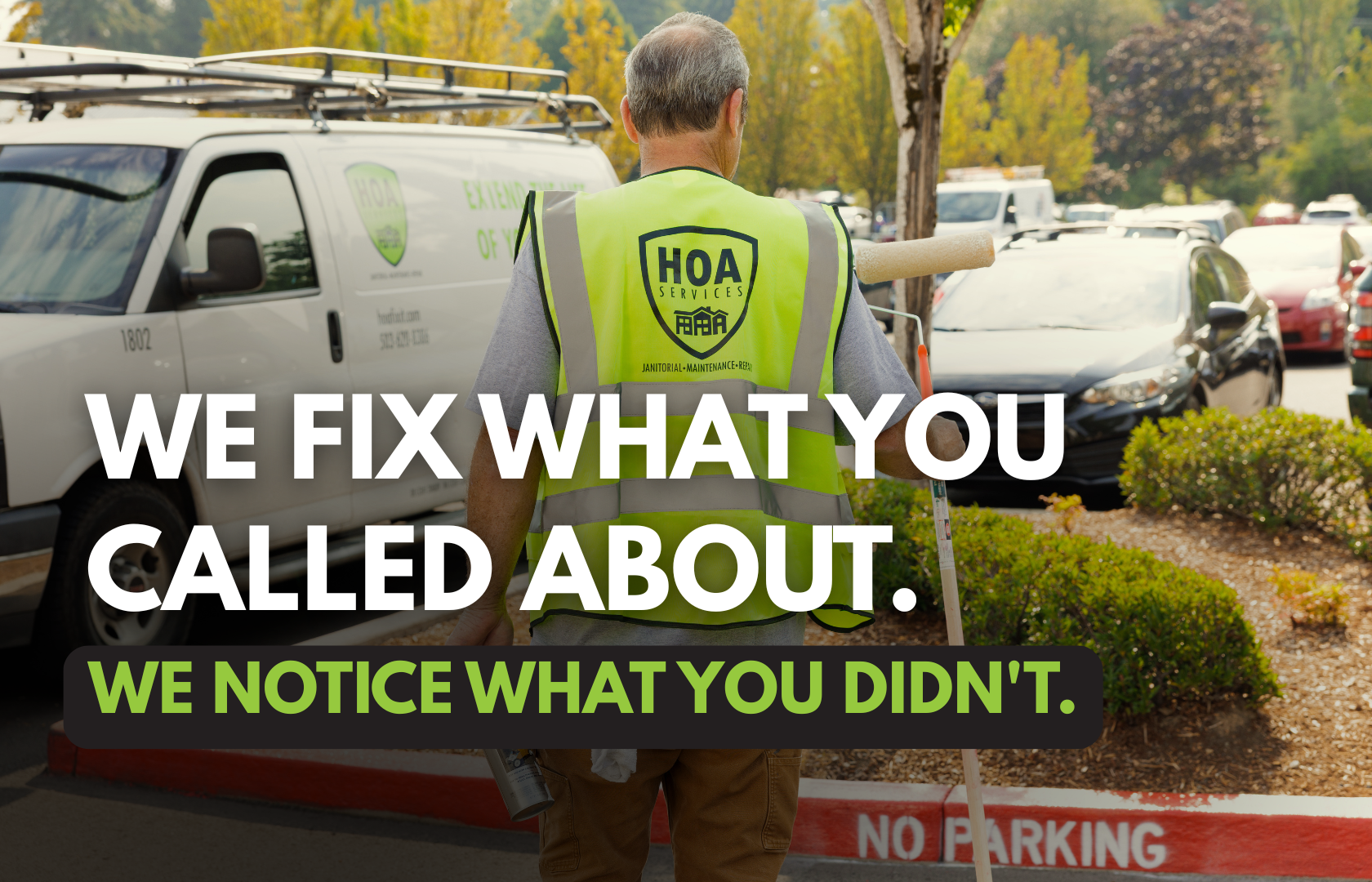
Most handyman visits end the moment the task on the list gets fixed. At HOA, the technician’s eyes work overtime on the job. What they notice often matters more than what brought them there in the first place.
Most Handyman Visits End When the Task Is Done. Ours Doesn't Stop There.
A typical handyman call has a defined scope. Fix the hinge, replace the pull, patch the drywall, and the visit is over. HOA’s technicians work from the same job ticket, but they’re trained to keep their eyes open past the edges of it. That’s the “eyes up” philosophy in practice, not just a phrase on a service page.
A Loose Hinge and a Soft Threshold Are Not the Same Repair. Noticing Both Is the Point.
A technician called out to adjust a door hinge is looking at the hinge. A technician trained to keep their “eyes up” also notices the threshold next to it, and whether it flexes underfoot in a way that suggests rot underneath. The hinge was the job. The threshold is the discovery, and it only gets caught if someone’s paying attention to more than the ticket.
Tightening a Loose Toilet Handle Takes Five Minutes. Soft Flooring Around the Base Does Not Fix Itself.
A technician called out to tighten a toilet handle is looking at the handle. A technician trained to keep their “eyes up” also checks the flooring around the base, since soft or discolored flooring near a toilet is usually the first sign of a slow leak. The handle was the job. The soft flooring is the discovery, and it only gets caught if someone can see past the job they were called out for.
Task-Focused Vendors Miss What's Next to the Task. “Eyes Up” Closes That Gap.
A vendor who only does what’s on the ticket isn’t doing anything wrong. They’re just not doing anything extra, and the gap between those two things is where small problems sit undiscovered for months. “Eyes up” closes that gap by treating observation as part of the job, not an optional add-on.
Catching a Problem Early Costs Less Than Catching It Late. Here's How That Math Holds Up.
A soft threshold caught during a hinge repair might mean a small wood repair. The same threshold left alone for another year might mean replacing the subfloor underneath it. Moisture staining caught behind a cabinet is a conversation about ventilation. Moisture ignored for a year is a mold remediation invoice. Early observation doesn’t cost anything extra. Late discovery always does.
“Eyes Up” Only Works If Someone Actually Reports What They See. Documentation Is the Difference.
Noticing a problem and reporting it are two different skills, and the second one is what makes “eyes up” useful instead of just observant. HOA technicians document what they see during a visit, whether or not it’s related to the work order, so a property manager gets that information instead of losing it to a conversation nobody remembers having. With a program like Maintenance Shield, that documentation feeds directly into the property’s ongoing maintenance plan instead of disappearing after the invoice is paid.
FAQs
What does "eyes up" mean at HOA Services?
It’s HOA’s guiding philosophy for handyman and maintenance work, meaning technicians stay alert for problems beyond the specific task they were called to fix. Prevention costs less than intervention, so catching an issue early saves money down the line.
Will a handyman technician report issues that aren't part of the original work order?
Yes. HOA technicians document anything they notice during a visit that could affect the property, even if it falls outside the scope of the ticket, so property managers get that information instead of it going unreported.
Does this add cost to a standard handyman visit?
No. Observation happens as part of the visit itself, not as a separate billable service. The value comes from catching a problem early, before it becomes a larger and more expensive repair.
How is this different from a general contractor or single-task vendor?
A vendor focused only on the ticketed task has no reason to look beyond it. HOA’s technicians are trained to notice adjacent issues as a standard part of every visit, which is the practical difference between a task-focused vendor and an “eyes up” one.
If your current vendor only sees the task on the ticket, you’re probably missing more than you know you’re missing. Schedule a handyman visit with HOA Services and get eyes on more than just the job you called about.