Decks and stairs are some of the most exposed elements of your property with constant foot traffic, year-round exposure to the elements, and a small margin of error when it comes to safety.
In the Pacific Northwest where rain, moisture, and seasonal temperature swings are the norm, deck and stair repair services play a critical role in preserving both function and long-term value. Approached proactively, deck and stair maintenance becomes a durability strategy, not a reactive expense.
Material Choice Matters in the Pacific Northwest
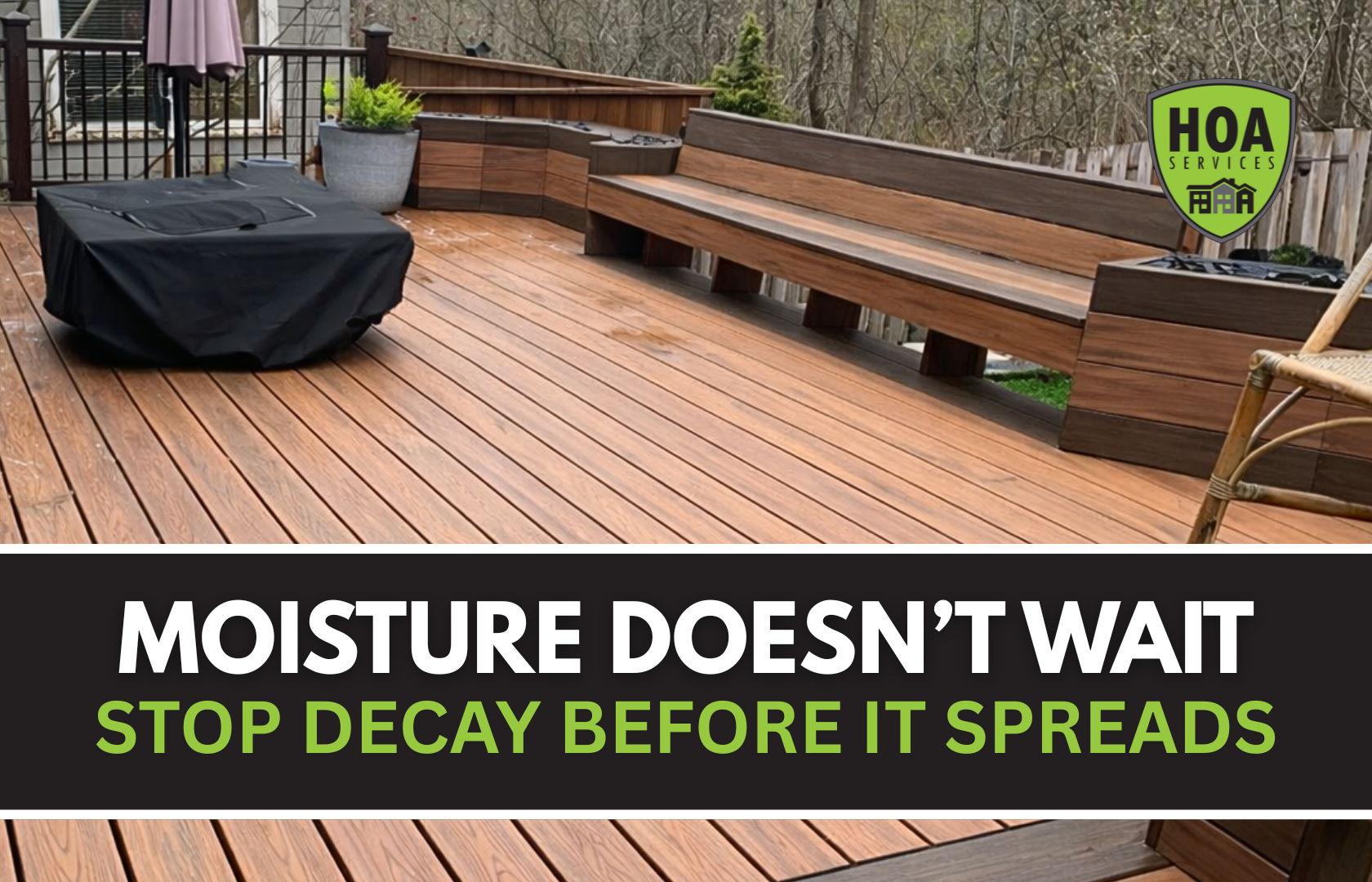
The lifespan of decks and stairs starts with the materials used. Each type of material performs differently in wet, rainy climates like Portland and Vancouver. Traditional wood decking is common, but without consistent maintenance, it’s especially vulnerable to moisture absorption, rot, and surface deterioration. Over time, untreated or poorly maintained wood weakens leading to costly repairs.
Composite materials, on the other hand, offer improved resistance to moisture. These materials often last longer with less upkeep, making composite vs wood decking durability an important consideration for property owners.
While highly durable, concrete decks and stair systems are not invincible. If joints and surfaces are left unprotected, they can experience cracking, spalling, and water intrusion. Choosing long-lasting deck materials that align with local climate conditions is one of the most effective ways to avoid unnecessary repairs and extend the life of your property.
Restoration Techniques That Extend Service Life
Preventive maintenance doesn’t necessarily mean replacement. In many cases, strategic restoration can significantly extend the lifespan of existing decks and stairs, while curtailing costs. Deck refinishing and reinforcement restores worn surfaces before deterioration becomes structural, preserving your property’s materials.
Waterproofing deck surfaces is especially critical in the Pacific Northwest. Applying protective coatings and sealants helps prevent moisture from penetrating deck boards, stair treads, and substructures. Combined with targeted repairs, stair and railing restoration can improve durability while maintaining compliance with modern safety standards. These restoration techniques often delay the need for full replacement.
Spotting Early Signs of Decay Before Problems Escalate
Common indicators that deeper issues may be developing include:
- Soft or spongy areas underfoot, which can signal moisture intrusion or internal rot.
- Surface cracking, splitting, or warping in decking boards or stair treads, often caused by repeated wet–dry cycles.
- Discoloration, staining, or persistent damp areas, which may point to trapped moisture or inadequate drainage.
- Loose, rusted, or deteriorating fasteners, compromising the integrity of decks, stairs, and railings.
- Wobbling railings or stair components, an early sign that structural connections are weakening.
Recognizing the signs of early deck decay in Pacific Northwest buildings allows property managers to intervene before damage spreads into load-bearing components.
Regular inspections, especially after extended rainfall or freeze-thaw conditions, support a smarter long-term deck maintenance strategy and help avoid emergency repairs.
Preventive Maintenance as a Long-Term Property Strategy
Decks and stairs aren’t just one-time installations. They’re assets that require ongoing care. Proactively approaching deck repairs in the Pacific Northwest allows property managers to better plan maintenance budgets and avoid surprise expenses. Regularly maintained decks and stairs perform better, last longer, and remain safer year after year.
HOA Services provides deck and stair repair services tailored to local climate demands. From material-specific stair repairs to deck waterproofing and refinishing services, our team helps protect your investment through practical, long-term maintenance planning.